About
Artificially smarter engineering
CADTALK
CADTALK is the leading CAD-to-ERP integration platform for discrete manufacturers. CADTALK gets the engineering world and the manufacturing world talking; automating the flow of Bills of Materials, item masters, routings, and engineering changes from CAD and PLM systems into ERP, so manufacturers can get products off the drawing board and onto the shop floor without drowning in manual data entry.
More than 500 manufacturers on six continents run their engineering-to-manufacturing handoff on CADTALK today. Behind those deployments is a single conviction that has never changed since the company was founded: the gap between engineering data and manufacturing execution is not a sync problem. It is a transformation problem. CADTALK solves it.
The problem CADTALK exists to solve
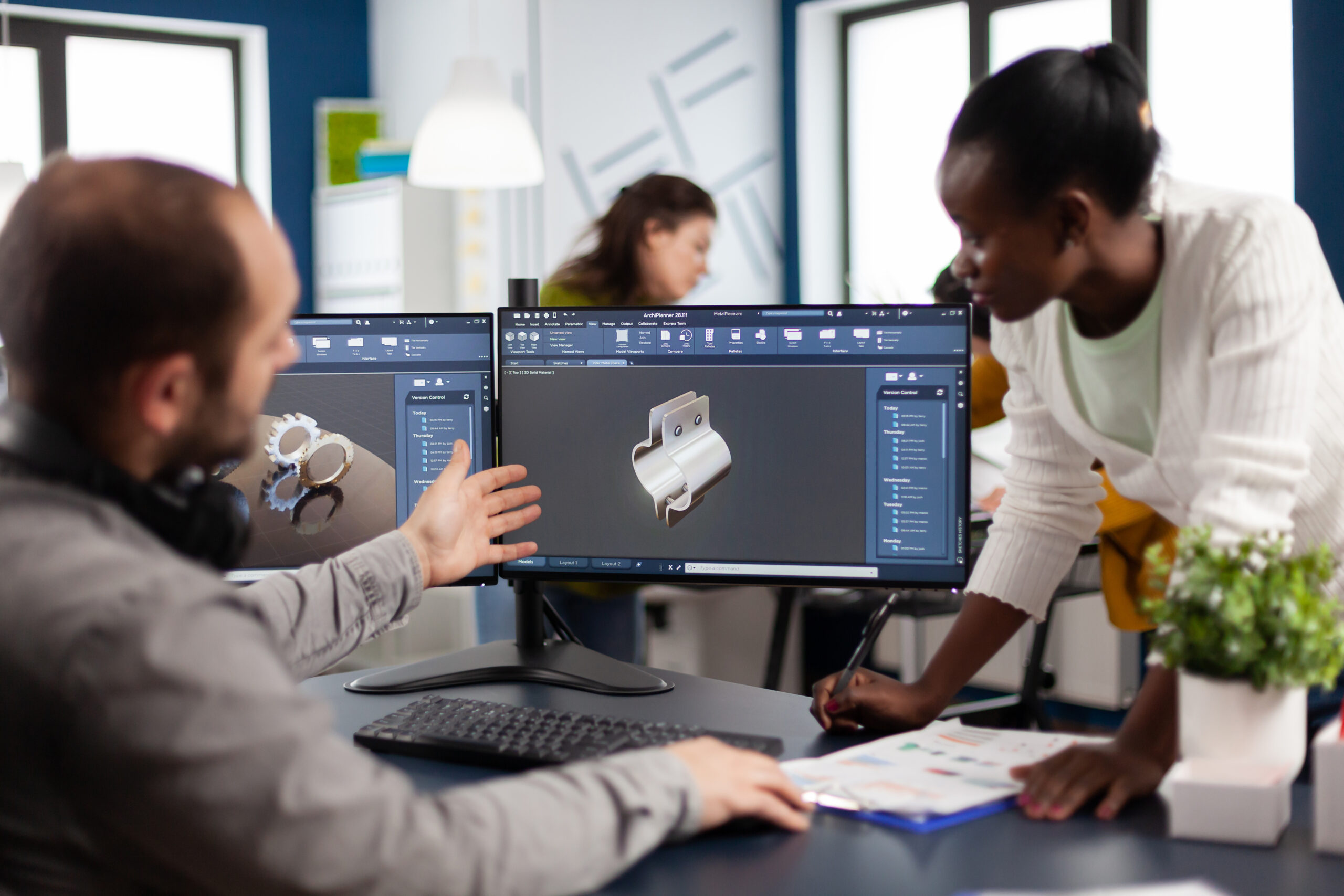
Every discrete manufacturer carries a version of the same workflow. Engineers design a product in CAD, validate it in a PDM or PLM system, and then someone, often a manufacturing engineer or a data entry clerk, takes those designs and manually recreates the relevant information inside the ERP system. Item numbers. Bills of Materials. Routing operations. Raw material callouts. None of it transfers automatically. None of it translates cleanly.
The gap costs manufacturers in three ways. Speed: products take longer to move from approved design to production-ready work order. Accuracy: manual reentry introduces errors that surface later as scrap, rework, or wrong-part builds. And attention: skilled engineers spend hours each week entering data instead of designing.
Generic integration tools address the speed problem by automating the data transfer. They pump whatever sits in the CAD or PDM system over to the ERP and call it done. But engineering data and manufacturing data are not the same thing. An engineering Bill of Materials reflects design intent, how a product is assembled conceptually, organized around form and function. A manufacturing Bill of Materials reflects production reality, how a product is actually built, organized around fabrication sequence, raw material specifications, and routing steps. Forcing one into the shape of the other creates a different set of errors. CADTALK transforms the data rather than copying it, applying the business logic manufacturers need to make the handoff actually work.
The four differentiators
Automated BOM transformation:
98% reduction in manual BOM entry
Continuous improvement platform:
New features rolled out universally every few weeks, no costly customizations required
Premium customer support and industry expertise:
Rapid issue resolution, minimal downtime
Highly configurable, no-code:
Customers can manage workflows and mappings themselves without vendor involvement
The origin:
A 1998 observation on the shop floor
Scott Brickler did not set out to found a software company. He set out to be an industrial engineer.
In the late 1990s, Scott joined RA Jones as a co-op student. RA Jones made packaging machinery, the kind of highly engineered, custom mechanical equipment where the gap between what engineers design and what manufacturing needs to build is at its widest. Working on the shop floor, Scott watched the same scene play out repeatedly. Engineers would finish a design in CAD, print drawings, and send them to manufacturing. Manufacturing engineers would then sit down at the ERP terminal and manually type in every item, every BOM line, every routing step, recreating work that already existed in digital form, in another system, one room away.
The inefficiency was obvious. The solution seemed obvious too: connect the systems. But the more Scott studied the problem, the more he understood that connection alone would not solve it. The two systems spoke fundamentally different languages. CAD and PDM captured design intent. ERP captured manufacturing execution. Getting from one to the other required translation.
Scott carried that observation forward as his career developed. He went on to work with SigmaTek on nesting software, deepening his understanding of how manufacturing data behaves downstream of engineering decisions. The insight from RA Jones traveled with him: the real gap in manufacturing software was not between applications, it was between two different ways of thinking about the same product.
By 1998, he could describe the problem precisely. It would take another eight years before the tools and the opportunity aligned to let him build the answer.
The launch:
2006
In 2005, Scott founded SolutionsX, a Syteline ERP consulting firm. Working directly inside customer environments, he saw the engineering-to-manufacturing handoff problem from the ERP side. He understood not just what data manufacturers needed in their systems, but why existing approaches for getting it there kept failing. The consulting work gave him both the domain knowledge and the customer relationships that would make a product viable.
CADTALK development began in 2006, the same year Scott's daughter was born, a coincidence he notes with some frequency. The first versions focused on connecting SolidWorks and Autodesk Inventor to Infor SyteLine, the ERP systems most common among the midmarket manufacturers SolutionsX served. The product went through several iterations over the next two years. By 2008, the architecture that underlies CADTALK today was in place.
The product grew through SolutionsX's customer base initially, deployed as part of ERP implementation projects. Manufacturers who had just gone live on a new ERP system discovered they still had the same data entry problem they had before the implementation, and CADTALK gave them a way to close it.
The core transformation philosophy, that CADTALK should not simply copy data but should apply intelligent business rules to convert engineering structures into manufacturing structures, was present from the beginning. Customers were not buying a sync tool. They were buying the accumulated domain knowledge of what discrete manufacturers actually need in their ERP systems, packaged as software.
Separation and scale:
2019 to now
For more than a decade, CADTALK operated under the SolutionsX umbrella. That structure worked well for the initial customer base, where SolutionsX was the ERP implementation partner and CADTALK was part of the engagement. But as CADTALK's capabilities expanded to cover more ERP systems, it created an inherent tension: selling through a Syteline-focused consulting firm meant CADTALK was less available to manufacturers running other platforms.
In 2019, CADTALK separated from SolutionsX and became an independent software company. The separation was not a split. Scott remained at the helm of both entities. It was a structural clarification that allowed CADTALK to partner with ERP resellers and implementation firms across the major manufacturing ERPs, without those partners worrying about conflict with a competing consulting business.
The timing proved important. By 2019, cloud ERP adoption among midmarket manufacturers was accelerating sharply. Microsoft Dynamics 365 Business Central, IFS Cloud, Acumatica, and others were gaining ground in the same segments where SyteLine had been dominant. Manufacturers upgrading ERP systems needed the CAD-to-ERP integration problem solved for their new platform, and CADTALK's platform architecture made it possible to add ERP connectors without rebuilding the product from scratch.
The product line today spans three offerings. CADTALK ERP gets CAD and PDM systems talking to the ERP, the original problem, the original solution, now supporting 14 CAD systems, 6 PDM and PLM platforms, across the major manufacturing ERP platforms. CADTALK PLM carries engineering change management across PDM and PLM platforms and the ERP, keeping revision control and approval workflows synchronized. CADTALK DFM brings Design for Manufacturing logic upstream into the engineering process, surfacing manufacturability and cost implications before a design is released.
In 2025, CADTALK acquired Elmo Solutions, a competitor with complementary integration capabilities and a customer base that extended CADTALK's reach in the European manufacturing market. The acquisition expanded the combined platform's ERP and CAD coverage and brought additional implementation experience to the team.
How CADTALK thinks about the problem
The distinction CADTALK draws between linking and transforming reflects a specific technical and philosophical position about what manufacturers actually need.
Linking approaches automate the movement of data between systems. They are fast to implement and produce visible results quickly: items appear in the ERP, BOMs populate, part numbers stop requiring manual entry. But they treat the engineering system as the source of truth for manufacturing data, and engineering systems are not designed to carry manufacturing data. They carry design data. The attributes engineers track (geometric relationships, design variants, functional specifications) are not the attributes manufacturing needs for procurement, production planning, and shop floor execution.
Transformation approaches recognize that the handoff between engineering and manufacturing is where significant business logic must be applied. Raw material callouts must be resolved into purchasable items. Assembly structures that reflect design hierarchy must be reorganized into fabrication sequences. Routing operations must be derived from the combination of design intent and manufacturing capability. None of that logic lives naturally in a CAD file or a PDM vault. CADTALK carries it.
Scott described the distinction in a podcast episode the CADTALK team recorded on the subject: "Until we figure out how to create anti-matter replicators like we have in Star Trek, where you literally just take the idea that you have and it just generates it out of anti-matter, somebody has to figure out how to make the darn thing. That's what the ERP does." The comment captures something real about manufacturing. The gap between the design and the manufactured object is not trivial. Somebody, or something, has to carry the logic that gets from the design to the finished build.
CADTALK is that something.
Leadership

Scott Brickler, Founder and CEO: Scott founded CADTALK out of SolutionsX in 2006, building on nearly a decade of hands-on experience with the engineering-to-manufacturing handoff problem at discrete manufacturers. He leads product direction and customer strategy.

Jeff Brickler, CRO: Jeff leads CADTALK's revenue organization, including sales, partner development, and customer success. He and Scott co-host the Integrate Intelligently podcast, where the two discuss manufacturing integration, ERP trends, and the practical realities of connecting engineering and manufacturing operations.
The manufacturers who choose CADTALK share a common profile: they have hit the ceiling of what manual data entry or generic integration tools can do. They are scaling their product portfolios, running faster engineering change cycles, or implementing a new ERP system and discovering that the integration problem follows them from one platform to the next.
What they find is a product built from the inside of the problem outward. CADTALK's integration logic reflects the accumulated experience of more than 500 manufacturers across aerospace, defense, industrial equipment, electronics, consumer products, and process industries. The product knows what manufacturers need in their ERP systems because it was designed by people who spent years watching manufacturers try to get it there by hand.
Getting products from design to manufactured goods that generate revenue: that is the job. CADTALK does it.
See it on your systems
The fastest way to know what CADTALK does for your shop is to watch it run against your CAD and your ERP.
Prefer to talk to someone first? sales@cadtalk.com